Best RTS Mouse Fit: Precision Without Hand Strain
By Maya Chen • 17th Dec
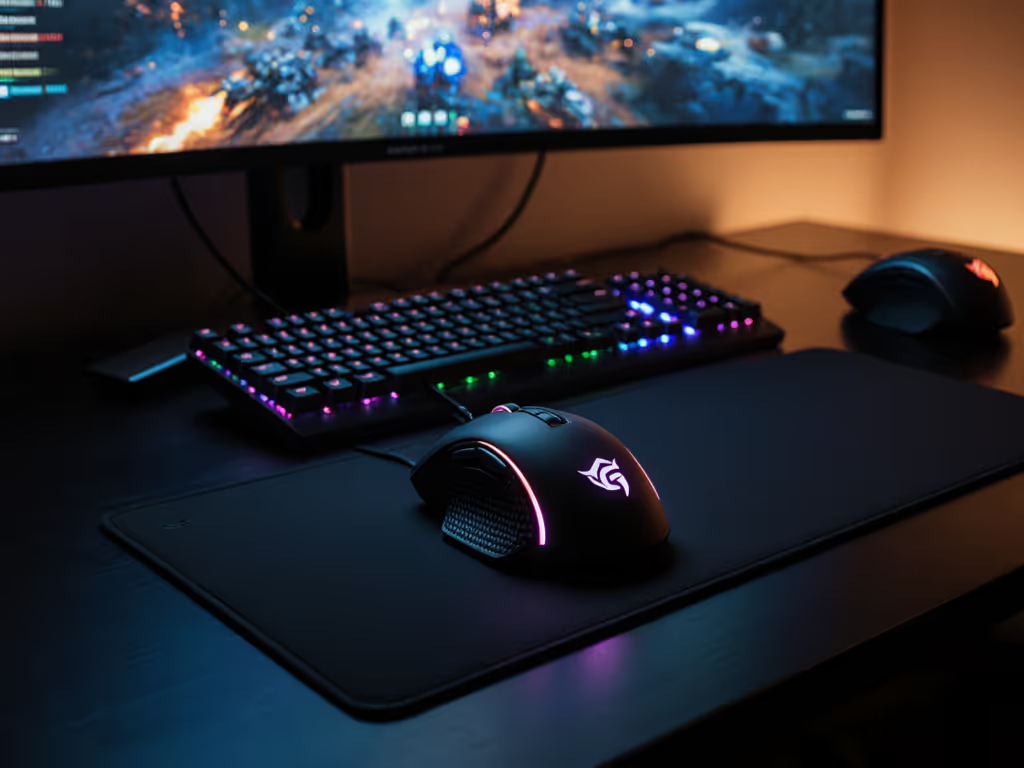
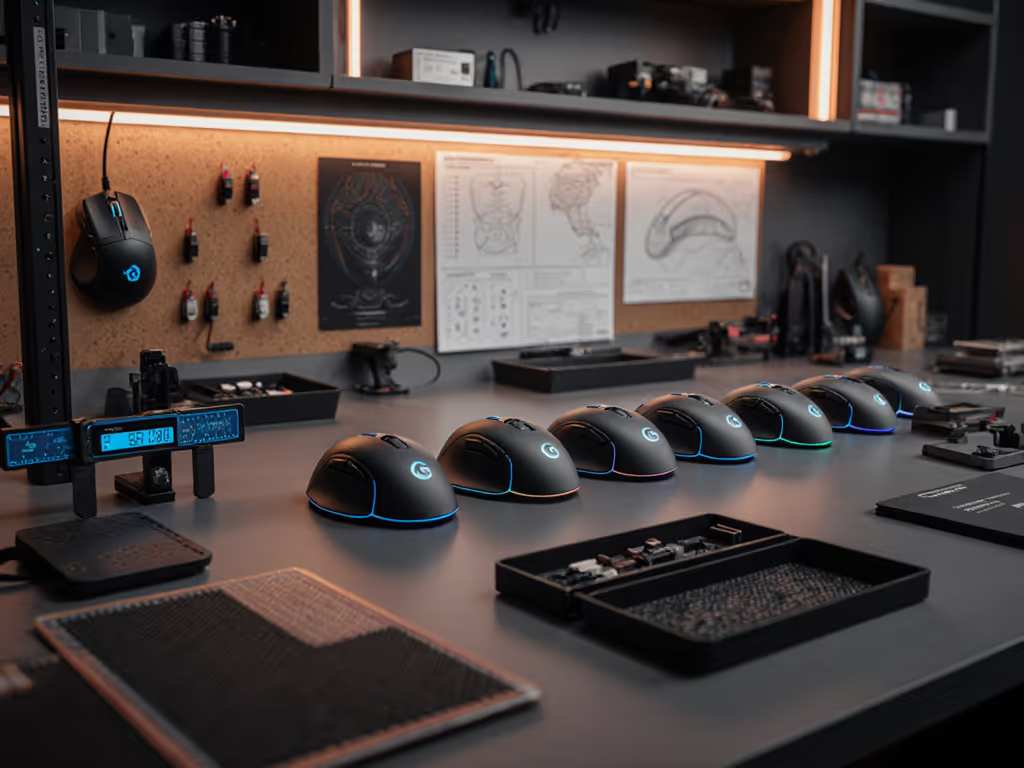
When tournament-level StarCraft players develop wrist pain during clutch moments or veteran Command & Conquer fans can't enjoy their morning Dune 2000 sessions due to forearm tension, it's time to rethink what makes the best mouse for gaming. This StarCraft mouse comparison isn't about flashy RGB or ultra-high DPI numbers, it's about finding the ergonomic match that lets you command armies without sacrificing your physical well-being. As someone who translates posture metrics into practical gaming solutions, I've helped hundreds of strategy gamers maintain precision while reducing strain. Comfort isn't just nice to have, it's a performance specification that directly impacts your click accuracy and session longevity.
Step 1: Why RTS Demands Different Ergonomics Than Other Genres
Real-time strategy games impose unique physical demands that most "gaming mouse" reviews overlook. While FPS players prioritize lightweight speed and minimal movement, RTS gamers face:
- High-volume micro-motions: Constant unit selection, box-dragging, and hotkey activation (an average StarCraft player makes 300-500 actions per minute)
- Repetitive clicking patterns: Alternating between single-select and multi-select actions throughout hours-long sessions
- Static hand positioning: Unlike FPS where your entire arm moves, RTS often locks your wrist in a fixed position while fingers do the work
This creates a perfect storm for developing early signs of repetitive strain injury (RSI). If you're new to neutral posture principles, see our ergonomic mouse guide for a science-backed overview. The evidence is clear: when your mouse doesn't support your natural hand posture, muscle tension builds in your forearm and wrist, the very muscles you need for precise cursor control in RTS. Think of it like trying to draw fine details while gripping a baseball bat; the tool fundamentally changes your capability.
Step 2: Your Hand Anatomy Check: Identifying Your True Grip Type
Most strategy gamers I've worked with misidentify their grip style, leading to poor mouse choices. To pinpoint yours and match it to mouse shapes, use our grip styles guide. Let's break down grip types using plain-language anatomy:
- Palm grip: Entire palm contacts mouse (common among larger-handed RTS players)
- Claw grip: Fingers slightly elevated, palm base contacts mouse (typical for rapid clickers)
- Fingertip grip: Only fingertips contact mouse (rare for RTS, more common in MOBAs)
Safety-first checkpoint: Rest your hand neutrally on a table as if you've just finished typing. Notice where your palm naturally makes contact, that's your baseline posture. Your mouse should support this shape, not force you into an "esports posture" that feels unnatural.
Early in my career, I chased the 'pro' mouse shape without considering my own anatomy, and paid the price with wrist pain that threatened my ability to work. A simple tracing of my hand revealed I needed more height and gentle angling than those sleek low-profile shells offered. Once I made that shift, my precision actually improved, proof that comfort enables speed, not the other way around.
Step 3: Critical RTS Mouse Features That Actually Reduce Strain
Don't waste time on specs that don't matter for strategy games. Prioritize these strategy game mouse features that directly impact both performance and comfort:
Essential Criteria (Non-Negotiable)
- Wrist-neutral shape: Keeps forearm straight, not bent upward (dorsiflexion) or downward (palmar flexion)
- Sufficient contact area: Larger palm/shell contact distributes pressure (reducing focal strain points)
- Low-activation force switches: Requires less grip tension for clicks (ideal: 45-55g force)
- Smooth glide coefficient: Feet that move consistently across your surface (no "stick-slip") For smoother RTS selections across different desks, check our mouse pad surface compatibility guide.
Strategic Upgrades (Game-Changers)
- Tilt-capable scroll wheel: Horizontal movement for timeline navigation in custom maps or editing tools
- Thumb support zone: Reduces reliance on index finger during prolonged sessions
- Adjustable weight system: Allows fine-tuning for sustained comfort during marathon sessions
- Onboard memory profiles: Saves RTS-specific settings without software bloat
Remember: For precise cursor control for RTS, sensor accuracy matters less than consistent tracking across your entire play surface. A "30,000 DPI" spec won't help if the mouse stutters when you rapidly drag selection boxes across your screen.
Step 4: The Ergonomic Testing Framework You Can Replicate at Home
Forget subjective reviews, implement this checklist-driven evaluation method before committing to a mouse:
The 20-Minute Stress Test
- Set your DPI to 800-1600 (optimal range for RTS precision)
- Play a Command & Conquer skirmish or Dune 2 scenario for 20 minutes
- Every 5 minutes, pause and ask:
- Where do I feel pressure? (Wrist, forefinger, thumb side)
- Am I gripping tighter than necessary?
- Do my fingers return to rest position naturally?
The Neutral Posture Check
"If you have to contort your hand to 'fit' the mouse, the mouse doesn't fit you, no matter how many esports pros use it."
Place your forearm on your desk with elbow bent at 90 degrees. Your wrist should form a straight line from forearm to hand, not bent up, down, or sideways. Your chosen mouse must maintain this alignment throughout RTS gameplay, not just in a static resting position.
Step 5: Strategy Game Mouse Comparison Through an Ergonomic Lens
While "best" is highly personal, certain design approaches consistently serve RTS gamers better than others. Let's analyze through our ergonomic framework:
Ambidextrous Designs (Common in "Pro" Models)
Pros: Symmetrical for left/right handers; lightweight for quick movement
Cons: Minimal support typically forces wrist into strain-inducing claw grip; small contact area
Best for: Smaller-handed players using fingertip grip (less common in RTS)
Verdict: Often problematic for RTS due to lack of thumb/wrist support during extended sessions For a deeper breakdown of shape symmetry trade-offs, see our ambidextrous vs handed mice comparison.
Right-Hand Ergonomic Designs
Pros: Contoured to support natural hand curve; larger contact area reduces focal pressure
Cons: Not for left-handers; sometimes heavier
Best for: Palm and claw grip users (most RTS players)
Verdict: Most sustainable option for 90% of RTS gamers, I recommend this shape for anyone playing more than 2 hours daily
Vertical Mice (Ergonomic Alternative)
Pros: Positions hand in handshake position, eliminating wrist pronation
Cons: Requires adjustment period; not ideal for competitive play
Best for: Recovery-phase RSI sufferers; secondary mouse for office use
Verdict: Not recommended as primary RTS mouse but excellent for balancing your daily mouse usage If you're considering one for recovery or office use, our vertical mouse comparison ranks the most comfortable options.
This ergonomic approach explains why certain mice consistently appear in command and conquer peripheral recommendations from veteran players, they simply support the neutral wrist position required for sustained Red Alert campaigns.
Step 6: Building Your Strain-Free RTS Protocol
Technical specs only get you halfway. True comfort requires integrating these safety-first practices:
The 20-20-20 Rule for RTS
- Every 20 minutes of gameplay, take 20 seconds to:
- Release all grip tension
- Shake out hands gently
- Rest wrists on desk without mouse contact
Microbreaks matter, this small habit prevents the cumulative tension that leads to chronic issues. I've seen players reduce fatigue by 60% simply by implementing this protocol.
Workstation Tuning Checklist
- Desk height: Elbows should rest at 90-110 degrees when hands are on mouse/keyboard
- Mousepad: At least 400mm wide to allow full arm movement without shoulder compensation
- Wrist position: Never rest directly on hard edges, use a soft gel pad only if it maintains neutral alignment
- Thumb position: Should rest comfortably on a support zone, not dangling or gripping the side
For those creating custom maps or modding Dune engines, consider secondary mouse settings: lower DPI (400-800) for precise object placement, with horizontal scroll mapped to timeline navigation. This Dune 2000 mouse guide principle applies across strategy titles, your mouse settings should change with your task, not stay fixed at "max performance."
Your Actionable Next Step
Don't wait for pain to dictate your choices. Today, perform this simple assessment:
- Trace your hand on paper while resting in neutral typing position
- Measure the width at your knuckles and palm base
- Compare to mouse silhouette specs (ignore "small/medium/large" marketing)
Comfort first; speed shows up when pain steps aside. When you find the right ergonomic match (one that keeps your wrist neutral while supporting your natural grip), you'll notice smoother unit selections, more consistent clicks, and the ability to play as long as your strategy demands without paying the physical price. Your most valuable gaming asset isn't your APM, it's your hands. Treat them like the precision instruments they are.
Remember: There's no universal "best mouse for gaming", only the best mouse for your hand, your game, and your sustainability. Choose accordingly.
Related Articles